Skip to content
Choosing in ground fiberglass pool installation is one of the fastest ways to get a beautiful backyard swimming pool that delivers low maintenance, fast installation, and long-term enjoyment. This guide covers fiberglass pools, fiberglass swimming pools, fiberglass inground, inground fiberglass pool installation, and compares them to gunite and vinyl liner pool options. Whether you search for fiberglass pools near me or need a fiberglass pool builder, this article explains the fiberglass pool installation process, timelines, costs, design choices, and contractor selection tips to help you move your pool project from planning to filling the pool.
Why Choose a Fiberglass Pool
Fiberglass pools provide a smooth, gelcoat finish that resists algae and requires less resurfacing than concrete pool surfaces. A fiberglass pool shell arrives preformed and ready to set, which makes installing an inground fiberglass pool faster than gunite pools or vinyl liner pool installations. Many homeowners choose fiberglass inground pools for speed, compact footprints, and minimal disruption to landscaping when compared to a complete gunite pool installation that requires forming, rebar, and concrete is poured on site.
Advantages of Fiberglass Swimming Pools
- Faster installation timeline because the fiberglass pool shell is manufactured offsite
- Lower long-term maintenance and smoother pool walls
- Fewer chemical fluctuations affecting water chemistry thanks to non-porous surface
- Tanning ledges, bench seats, and water features can be molded into fiberglass pool designs
- Minimal need for swimming pool resurfacing compared to gunite
Types of Pools and How They Compare
Pool types include fiberglass pools, gunite pools, and vinyl liner pools. Gunite pools and gunite pools near me require a gunite pool builder and gunite pool contractor to manage excavation, rebar, and concrete work. Vinyl liner pools require a skilled installer to ensure a tight vinyl liner fit and proper coping and deck details. Fiberglass pools offer an installable fiberglass pool shell that cuts many steps from the traditional installation process and often shortens the installation timeline for a professional pool builder or a fiberglass pool dealer.
Fiberglass vs Gunite vs Vinyl
Gunite pools are customizable in shape and size and favored by luxury pool builders but involve lengthy curing, plumbing and electrical, and more frequent resurfacing. Vinyl liner pools are generally lower initial cost but the vinyl liner will eventually need replacement. Fiberglass pools are limited to manufactured shapes but the fiberglass shell provides a durable, low-maintenance surface and a relatively quick installation that reduces landscape disruption.
Finding a Fiberglass Pool Builder or Dealer
Start by searching for fiberglass pool builder or fiberglass pool contractor and fiberglass pool dealer listings, read reviews, and ask to see completed installations. Ask the fiberglass pool builder about their experience with inground fiberglass pool installation and whether they perform excavation, backfill, setting the pool, and integrate coping and deck construction or coordinate these trades. If you search for fiberglass pools near me or fiberglass pool installer, verify licensing, insurance, and references to ensure proper installation and compliance with local building codes.
Questions to Ask Potential Contractors
- Do you manufacture fiberglass pool shells or work with a specific manufactures fiberglass pool shells partner?
- What is the installation timeline and key milestones from excavate to filling the pool?
- Who handles plumbing and electrical and pool filter installation?
- Do you provide warranties on the fiberglass shell and labor?
- Can you provide recent examples of fiberglass pool designs, tanning ledges, and water features?
The Fiberglass Pool Installation Process
The typical fiberglass pool installation process begins with a site visit and pool design selection, followed by permitting, excavation, setting the pool, connecting plumbing and electrical, backfilling, filling the pool, and finishing the pool deck and landscape. A professional installation team will coordinate crane placement to set the fiberglass pool shell, perform backfilling is the process to fill gaps around the shell, plumb the filtration equipment, and finish coping and deck. Below are step by step tasks that most fiberglass pool builders follow during an inground fiberglass pool installation.
Step-by-Step Installation Timeline
- Site survey and pool design selection to finalize pool shape and features
- Permits and planning to meet local building codes
- Excavation: dig a hole to the correct dimensions for the fiberglass pool shell
- Prepare base and bedding material to set a level pool shell
- Crane sets the fiberglass pool into the excavated hole and the installer levels it
- Plumbing and electrical: plumb the pool filter, drains, and pool equipment
- Backfilling: fill the gap around the shell with specified material while accounting for hydrostatic relief
- Coping and deck installation, landscape restoration, and signage
- Process of filling the pool and starting filtration and water chemistry balance
For many installations the total cost and timeline depend on soil conditions, access for a crane, depth of excavation, and whether the project includes a pool deck, tanning ledges, or extensive water features. A compact backyard can favor a fiberglass inground that ships as a shell and reduces the need to dig as much as a gunite pool installation.
Excavation, Backfill, and Structural Considerations
Excavating the site requires professional equipment to dig a hole that matches the fiberglass pool shell. The installer may use a crane to set the pool, then backfilling is the process to secure the shell, often using sand or pea gravel. Proper plumbing and electrical work is essential before backfilling so the installer can plumb skimmers, return lines, and the pool filter. The process of filling the pool occurs gradually while backfilling to maintain external pressure and keep the fiberglass pool level.
Hydrostatic Relief and Pool Safety
In areas with high water tables, the installation team must consider hydrostatic relief to prevent flotation of the fiberglass shell when the excavated hole fills with groundwater. Professional installation and following local building codes ensures proper vents, drains, and structural integrity to maintain pool level and safety.
Decking, Coping, and Finishing Touches
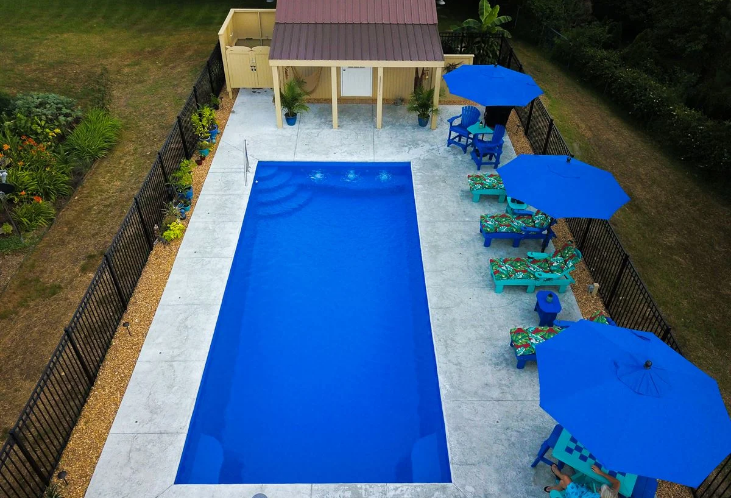
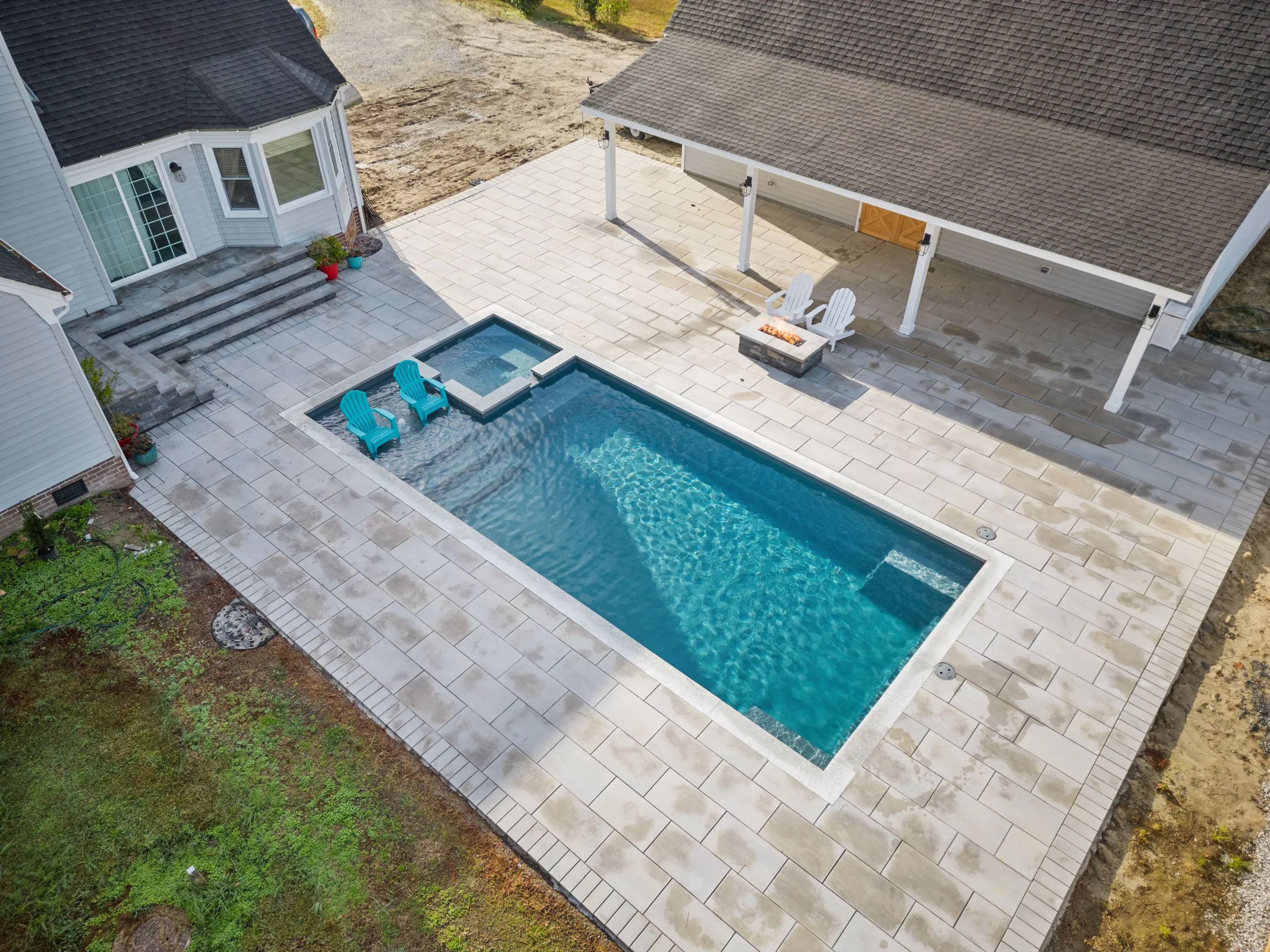
Once the fiberglass pool is set, a pool deck provides the surrounding area for lounging and landscape integration. Coping and deck materials can be poured concrete, pavers, or natural stone. Many luxury pool contractors incorporate tanning ledges, integrated steps, and water features into the fiberglass pool design. The pool builder will coordinate final grading, landscape restoration, and any pool area features like lighting and fountains.
Pool Equipment and Water Chemistry
Proper filtration, a reliable pool filter, and balanced water chemistry keep the fiberglass pool surface in prime condition. Filtration systems vary with pool size and expected bather load. Your installer will recommend pumps, heaters, and automation to maintain water chemistry and lower long-term costs compared to frequent swimming pool resurfacing required by some gunite pools.
Costs, Timeline, and DIY Considerations
Total cost for fiberglass inground pool installation varies by pool shape, site complexity, and additional features. Fiberglass pools generally have higher initial cost than some vinyl liner pools but lower maintenance and faster installation than gunite. A DIY inground pool or install your own fiberglass pool approach is possible for experienced homeowners but risks improper plumbing or backfilling. Most homeowners opt for a professional pool builder or installer to ensure correct fiberglass installation and to protect warranty coverage.
Estimating Pool Cost and Timeline
Expect a fiberglass pool installation timeline that ranges from a few days for excavation and set to several weeks for decking and permitting tasks. The process is often faster than a gunite pool project that requires curing and multiple trades over months. Ask your fiberglass pool dealer for an installation guide, a clear schedule, and a total cost breakdown for excavation, pool shell, plumbing and electrical, pool deck, and landscaping.
Renovation and Resurfacing Considerations
If you have an existing concrete pool or gunite pool, a gunite pool renovation may include resurfacing or converting to a vinyl liner or even replacing with a fiberglass shell in some cases. Swimming pool resurfacing for gunite pools is a common maintenance task while fiberglass pools typically avoid frequent resurfacing due to their durable surface.
When to Remodel vs Replace
Consider a full replacement if the concrete pool has extensive cracking, persistent leaks, or requires constant resurfacing. A professional assessment from a pool contractor can help you decide between renovation, resurfacing, or replacing with a fiberglass inground pool that installs faster and requires less maintenance.
Choosing the Right Pool Shape and Design
Fiberglass pool designs include many popular pool shapes and sizes and manufacturers like Latham Pool and other manufactures fiberglass pool shells offer a range of fiberglass pool designs to suit compact yards or luxury installations. Consider pool shape, tanning ledges, bench seating, and water features to match your lifestyle and landscape. Work with a pool builder to finalize pool design, integration with your pool deck, and the placement of filtration equipment and plumbing access.
Hiring a Professional vs DIY Installation
Professional installation ensures compliance with local building codes, correct plumbing and electrical hookups, and proper backfilling and pool level maintenance. DIY pool projects can save money upfront but may lead to increased long-term costs if the fiberglass installation is not done correctly. Most homeowners benefit from hiring a fiberglass pool contractor or inground pool contractor to manage the entire pool project from breaking ground to filling the pool and handing over maintenance instructions.