Skip to content
Serving Westchester, Putnam, Rockland, Dutchess, and the Hudson Valley, NY

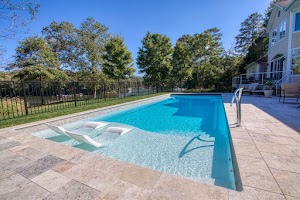
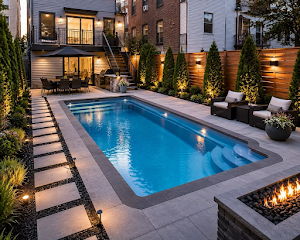
Coastal Pools & Spas builds gunite pools for homeowners across Westchester County, Putnam County, Rockland County, Dutchess County, and the wider Hudson Valley region. Unlike a pre-formed fiberglass shell, a gunite pool is built in place — shaped, sprayed, and finished on-site — which gives you more flexibility in size, shape, and depth than a factory-made shell allows.
This page covers what a gunite pool builder actually does, how the construction process works, what affects cost, and where to find more detail on your specific area. If you're still deciding between pool types, our fiberglass pool builder page covers that construction method for comparison.
A gunite pool builder manages a longer, more hands-on construction process than a fiberglass installation. The work spans excavation, steel reinforcement, the gunite (sprayed concrete) shell itself, curing time, interior finishing, and equipment setup. Homeowners searching for a gunite pool contractor or gunite pool company are typically looking for the same thing: a builder who can manage this process from design through startup.
Designing a custom shape, depth, and layout suited to your yard
Installing the steel rebar framework that gives the shell its structure
Applying and shaping the gunite shell on-site
Coordinating plumbing, electrical, and equipment installation
Applying the interior finish and walking you through startup and care
Gunite and fiberglass are two common pool types homeowners compare, and each follows a different construction process. Neither option is universally better — the right choice depends on your timeline, budget, design goals, and how much long-term maintenance you're prepared to take on.

Built and shaped on-site over a steel frame. Allows custom shapes, depths, and design features, but construction includes curing time and the finish typically needs periodic resurfacing over the pool's lifespan.

A pre-formed shell set into an excavated space. Generally a shorter installation window and a smooth, non-porous surface that doesn't need resurfacing, with less flexibility in shape.
For more on the fiberglass side of that comparison, see our fiberglass pool builder page.
Gunite construction has more steps than a fiberglass installation, and curing time between stages means the overall schedule runs longer. We keep each stage clearly communicated so you know what's happening and when.
Design consultation covering shape, depth, features, and budget
Permit paperwork support and scheduling with your local municipality
Excavation and steel rebar framework installation
Gunite application and curing time before the next stage
Plumbing, electrical, and equipment installation
Interior finish, tile and coping, water fill, and a startup walkthrough
There's no single price that applies to every project. Cost depends on several factors specific to your pool and property:
Custom shapes and deeper pools add material and labor
Tighter driveways or limited equipment access can add time and cost
Steel reinforcement and gunite application scale with pool size and design complexity
Plaster, pebble, and tile finishes vary widely in price
Pump, filtration, sanitation, heating, and automation options all affect the total
Pavers, stone, and concrete decking vary widely in price
Set by your municipality and vary by project
We provide an itemized quote after a site visit, so you can see exactly what's driving the cost for your property rather than working from a generic estimate.
Coastal Pools & Spas builds gunite pools for homeowners throughout the Hudson Valley region, including:
You can also see more on gunite construction in general on our gunite pools page. Not seeing your town listed? Request an estimate below and let us know your location — we'll confirm whether we serve your area.
REQUEST YOUR POOL ESTIMATEA gunite pool builder manages the full on-site construction process — excavation, steel reinforcement, gunite application, curing, and finishing — rather than installing a pre-formed shell. This generally means more coordination across stages and a longer project timeline.
Yes. Homeowners use "builder," "contractor," and "company" interchangeably when searching for this service. They all refer to the business responsible for planning and constructing the pool.
A gunite pool is built and shaped on-site over a steel frame, which allows more design flexibility but takes longer and needs periodic resurfacing. A fiberglass pool is a pre-formed shell that generally installs faster and needs less surface maintenance.
Gunite construction includes curing time between stages, so the overall schedule typically runs longer than a fiberglass installation. The exact timeline depends on your design, permitting, and weather.
We build gunite pools for homeowners across Westchester, Putnam, Rockland, and Dutchess counties, along with the surrounding Hudson Valley. See the service area links above, or request an estimate to confirm coverage for your address.
Start with your county page above if you're in our service area. If your town isn't listed, request an estimate and let us know your location, and we'll confirm whether we can take on the project.
Common interior finishes include plaster, pebble, and tile, each with different textures, colors, and price points. We go over finish options during the design consultation.
Yes, over time. The interior finish on a gunite pool wears gradually and typically needs resurfacing at some point during the pool's life, unlike a fiberglass shell's gel coat.
In most cases, yes. Our team can help with local permitting requirements and coordinate the paperwork and inspections that are part of the project timeline. Specific permit rules vary by municipality, so this is confirmed during your site consultation.
Useful questions include how they sequence excavation, steel, gunite, and curing, what finish options they offer, what's included in the equipment package, and what warranty coverage applies to the shell and workmanship. A written scope and timeline before work begins is a good sign you're working with an organized builder.
If you're considering a gunite pool, book a free consultation. We'll go over design options, site requirements, and scheduling together, and give you a clear picture of what the project looks like for your property.
REQUEST YOUR POOL ESTIMATE