Skip to content
Most homeowners who want a custom pool have heard the word gunite but have only a vague idea of what it means and no idea at all what actually happens on their property over the eight to ten weeks it takes to build one. That knowledge gap is a problem, because understanding what your gunite pool builder is doing at each stage is the only way to hold them accountable to a standard of quality.
This blog is a stage-by-stage breakdown of the gunite pool construction process. It explains what happens, why it matters, and what you should expect to see and hear from your builder at each milestone. It also covers what separates an experienced gunite pool builder from one who is learning on your dime.
What gunite actually is and why it is used for pools
Gunite is a dry mixture of cement and sand that is pneumatically projected through a hose at high velocity and mixed with water at the nozzle just before it hits the surface. The result is an extremely dense, low-permeability concrete shell that can be formed into any shape imaginable. The reason gunite is the material of choice for custom pool construction rather than standard poured concrete is control. Poured concrete requires formwork, settles under gravity, and is difficult to apply to curved or irregular surfaces. Gunite can be applied to a steel rebar framework of any configuration, which gives a skilled gunite pool builder the ability to build pools with vanishing edges, grottos, beach entries, infinity ledges, integrated spas, and any other feature a designer can conceive. The density and durability of a properly applied gunite shell also means it is one of the most structurally long-lasting pool types available, with shells that routinely last forty years or more when properly maintained.Stage one: design and engineering
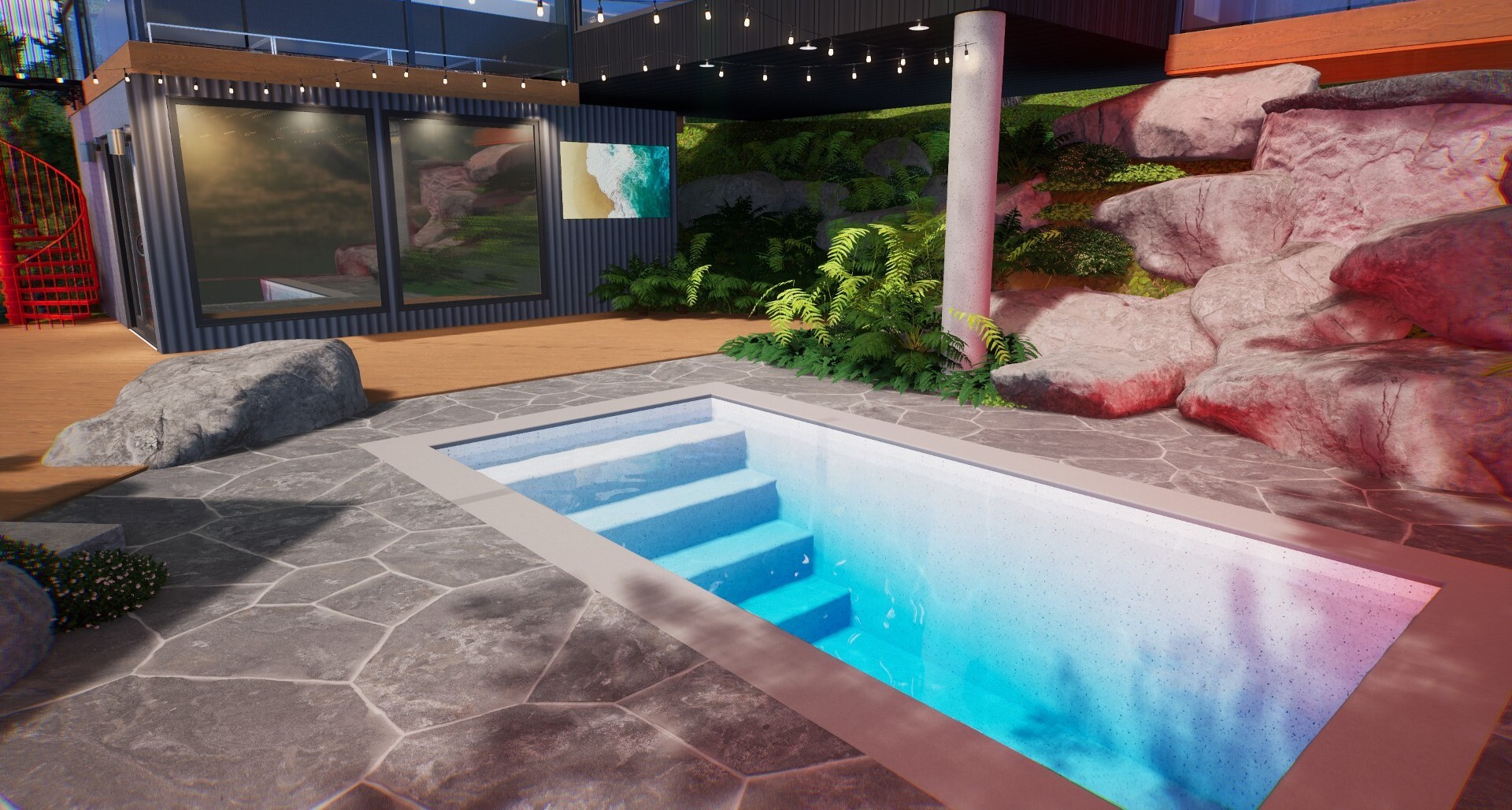
A serious gunite pool builder does not start with a shovel. They start with a design conversation. Because every gunite pool is built from scratch, the design phase is where the entire project is defined. Pool shape, depth profile, feature placement, plumbing layout, equipment sizing, coping style, decking material, and integration with existing landscaping are all determined before a single permit is submitted. At Coastal Pools and Spas, this phase includes a 3D rendering of your finished backyard. You see the pool, the surrounding deck, any water features, and the relationship to your home before any work begins. This is not a cosmetic exercise. It is a planning tool that catches conflicts early, when they are cheap to resolve, rather than during construction, when changes cost time and money.Stage two: permits and site preparation
Gunite pool construction in New York requires building permits from your local municipality. The permit application typically includes engineered drawings of the pool shell and equipment, a site plan showing setbacks from property lines and structures, and in some jurisdictions a separate electrical permit for pool lighting and pump systems. Permit timelines vary but typically run two to six weeks. While permits are being processed, your gunite pool builder should be finalizing material orders, scheduling the excavation crew, and confirming equipment lead times, particularly for items like custom coping stone or specialty water feature components that require longer procurement windows.Stage three: excavation
Excavation is the first visible sign of progress on your property. A small excavator removes soil to the dimensions specified in the design, including additional clearance around the perimeter for plumbing and backfill. The excavation must be precise in both dimension and profile, because the gunite shell will follow the contours of the excavated space. Soil conditions significantly affect excavation complexity and cost. Sandy or loamy soil excavates quickly and cleanly. Clay soil is slower and can be unstable. Rock requires specialized equipment and additional time. A skilled gunite pool builder identifies likely soil conditions during the design phase and prices accordingly, rather than presenting unexpected cost increases mid-project.Stage four: steel framework
After excavation, a crew installs a grid of steel rebar throughout the pool shell. The rebar is bent, tied, and positioned to match the engineered design, including all curves, steps, benches, and depth transitions. This steel framework is the structural skeleton of the pool. The quality of the rebar installation directly affects the long-term structural integrity of the finished shell. Inspectors from the local building department typically review the steel framework before gunite is applied. This is a mandatory checkpoint, not optional, and no reputable gunite pool builder should apply gunite before this inspection is passed and documented.Stage five: gunite application
This is the stage that gives the pool type its name. A specialized crew operates a gunite machine that mixes dry cement and sand pneumatically and projects it through a hose. The nozzle operator controls water introduction at the point of application, adjusting the mix to achieve the right consistency for each section of the shell. Gunite application requires significant skill. Applying too wet a mix produces a weak shell. Too dry and the material does not bond properly. Nozzle distance, angle, and speed all affect the finished density. A crew that does this work daily produces a demonstrably better shell than one that does it occasionally, which is why experience matters enormously when selecting a gunite pool builder.Stage six: plumbing, equipment, and finishing
With the shell cured, plumbing lines are roughed in for returns, drains, skimmers, and any water features. Equipment including the pump, filter, heater, and sanitation system is set and connected. Coping is installed around the top edge of the shell, decking is poured or laid, and the interior surface finish is applied. Surface options for gunite pools include standard white plaster, colored plaster, pebble aggregate finishes, and full tile, each with different aesthetics, durability profiles, and price points.How gunite pool builders compare across key criteria
| Criteria | Coastal Pools and Spas | National franchise builders | Single-trade operators |
| Gunite experience | 20+ years dedicated | Varies by franchise location | Often limited |
| Design capability | Full 3D custom design | Template-based designs | Minimal design support |
| In-house gunite crew | Yes | Usually subcontracted | Usually subcontracted |
| Permit management | Full end-to-end | Inconsistent by location | Often owner-managed |
| Feature complexity | Grottos, vanishing edges, spas | Standard features only | Limited |
| Surface finish options | Plaster, pebble, tile | Standard range | Usually plaster only |
| Outdoor living scope | Full backyard builds | Pool and deck only | Pool only |
| Post-build service | Ongoing support | Call center dependent | Limited availability |
What to look for in a gunite pool builder’s portfolio
When evaluating a gunite pool builder, their portfolio of completed projects is the most honest signal of their capability. Look for variety in shape and size, evidence of complex features like vanishing edges or integrated spas, quality of coping and decking workmanship, and consistency of finish across multiple projects. Also ask how old some of the featured projects are. A pool that looks good after one season proves less than one that still looks good after ten. If a builder can show you projects that are five to fifteen years old and still performing well, that is genuine evidence of quality construction. Ask to visit a completed project in person if possible. Photographs can be edited. Standing at the edge of a real pool built by your prospective contractor, running your hand along the coping, and looking at the surface finish in natural light will tell you things no photograph can.FAQ’s
How long does a gunite pool take to build?
Most gunite pool builds run eight to ten weeks from excavation to the first swim. Complex designs with extensive water features or large decking areas may take longer.
How long does the gunite shell need to cure before the pool can be filled?
Gunite typically requires twenty-eight days to reach full cure strength. During this period the shell must be kept moist through a process called wet curing to prevent cracking.
Can a gunite pool be built in any shape?
Yes. This is the primary design advantage of gunite over fiberglass. Any shape that can be drawn and engineered can be built in gunite, including freeform lagoons, geometric infinity pools, and everything in between.
What interior finish options are available for a gunite pool?
Standard white plaster is the most common and affordable option. Colored plaster, quartz aggregate, pebble aggregate, and full tile finishes are all available at ascending price points and durability levels.
How often does a gunite pool need to be resurfaced?
Standard plaster surfaces typically need resurfacing every ten to fifteen years. Higher-end aggregate and tile finishes last longer. Proper water chemistry significantly extends the life of any surface.